
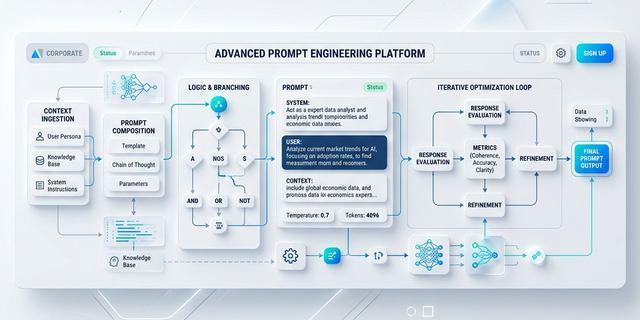
10x Your AI Results: The Ultimate Guide to Perfect Prompts (2026)
Stop getting generic AI results. Master how to improve AI prompts with the 6-layer optimization stack, the Golden Equation, and advanced reasoning techniques.
Read Article
Master the art of communicating with AI. Discover guides, best practices, and expert techniques for ChatGPT, Claude, and Gemini.
Prompt engineering is the practice of designing precise instructions that guide AI models like ChatGPT, Claude, and Gemini to produce high-quality, relevant outputs. Whether you're writing prompts for text generation, image creation, code completion, or data analysis, the quality of your prompt directly determines the quality of the AI's response.
At ImprovePrompt.ai, we've distilled years of professional prompt engineering experience into actionable guides. Our articles cover everything from the foundational 6-layer Prompt Optimization Stack to advanced techniques like few-shot prompting, chain-of-thought reasoning, and multi-pass iteration workflows.
The difference between a vague, generic AI response and a precise, expert-level output often comes down to a few structural changes in your prompt. Our guides teach you these exact structural patterns — the same techniques used by senior AI engineers in production systems.
Ready to skip the theory and optimize a prompt right now? Try our free prompt library with 50+ ready-to-use templates, or use our AI prompt optimizer to automatically rewrite your prompts for maximum effectiveness.
Stop getting generic AI results. Master how to improve AI prompts with the 6-layer optimization stack, the Golden Equation, and advanced reasoning techniques.
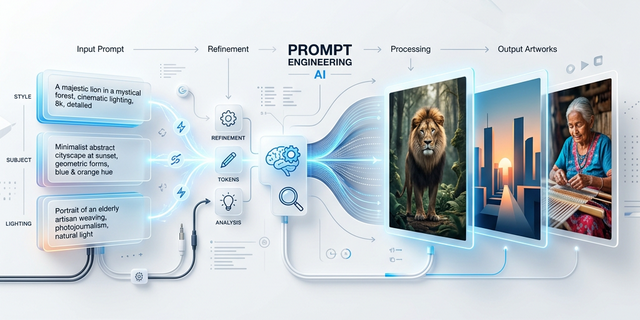
Generate breathtaking AI art with these image generation AI prompts. Master lighting physics, camera lenses, and composition for Midjourney and DALL-E.
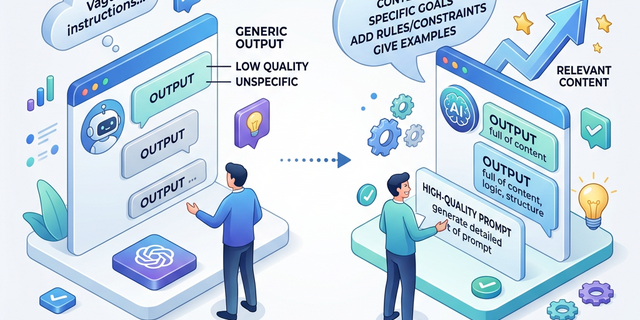
Stop getting generic answers. Learn exactly how to improve your ChatGPT prompts with the 4-pillar framework: Role-play, Chain-of-Thought, Context injection, and Output Contracts.
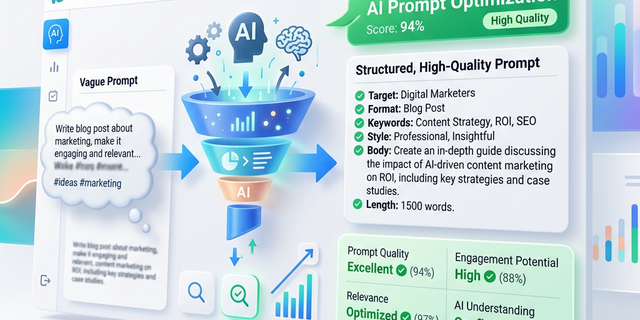
Stop guessing what works. Discover the best AI prompt improver tools of 2026, comparing free and premium options like ImprovePrompt.ai, PromptPerfect, and more.
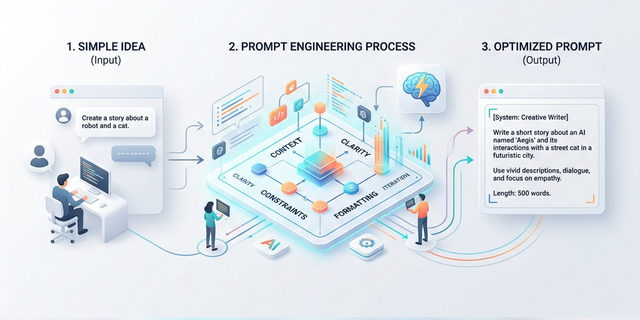
Master prompt engineering for beginners with our 2026 guide. Learn the ROIF framework to write better AI prompts today and stop getting generic AI results.
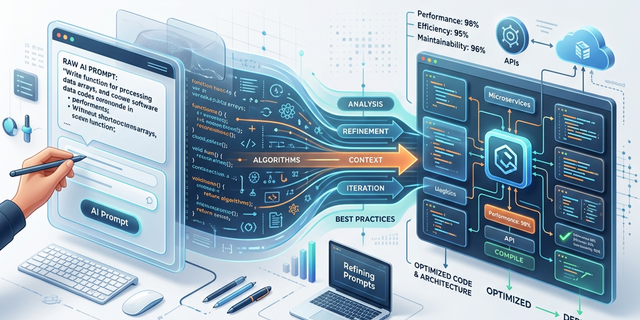
Stop debugging your prompts. Learn how to optimize AI prompts for coding using context marshalling, few-shot logic, and technical constraints to get production-ready code.
Discover the definitive comparison of Claude vs ChatGPT. Learn which AI model responds better to optimized prompts, their architectural differences, and how to engineer the perfect instructions for each.
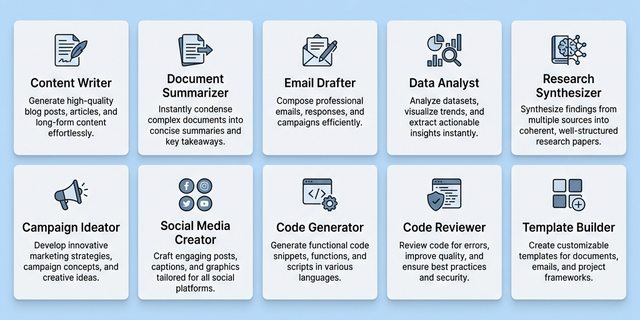
Discover 10 battle-tested prompt templates that consistently produce perfect AI responses. Copy, customize, and deploy these frameworks for any task.

Stop guessing on stocks. Copy these 10 institutional-grade Claude prompts to screen tickers, build DCF models, and find undervalued gems like a Wall Street pro.

Automate your wealth building. Copy our 30 expert ChatGPT prompts to crush debt, optimize taxes, budget effortlessly, and build passive income in 2026.

Unlock the ultimate travel hacks with these 10 must-know ChatGPT prompts. From flight price optimization to emergency safety plans, travel like a pro in 2026.
Stop guessing. Let our AI automatically rewrite your requests for maximum performance.
Try Our Free Prompt Optimizer